

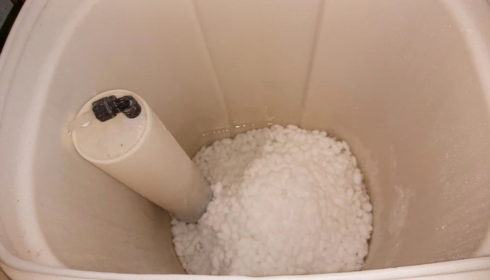

So, you’re standing in your garage or laundry room, eyeing the inside of your water softener like it’s some kind of science project gone slightly sideways. Maybe there’s more water than you expected. Or maybe it’s lower than last time. Maybe you didn’t even know there was supposed to be water in there at all.
Don’t worry—you’re not alone. Plenty of folks have asked this exact same question: “How much water should be in my water softener?” The answer, like most things in life, isn’t a simple one-size-fits-all. But let’s break it down in plain English, no jargon, no panic.
First Things First: What’s a Water Softener Actually Doing?
Before we dive into water levels, let’s rewind a bit. A water softener is basically your home’s bodyguard against hard water—the stuff filled with minerals like calcium and magnesium that make your shower glass cloudy, your skin dry, and your pipes cranky.
The system works by exchanging those hard minerals with something gentler, usually sodium, using resin beads. Then it cleans itself during a regeneration cycle, flushing out the minerals and refilling with fresh water and salt to do it all over again. It’s kind of like doing laundry for your plumbing system.
And where does all that salty magic happen? In the brine tank.
So… How Much Water Should Be in There?
Alright, here’s the real talk. You might expect the tank to be full or totally empty—but neither is typical. In most cases, you’ll find a few inches to maybe a foot of water sitting in the bottom of the brine tank, depending on your system’s design and regeneration schedule.
A common rule of thumb: if there’s no water, something might be wrong. If it’s filled to the brim, something’s definitely not working properly.
When folks ask, “how much water should be in my water softener”, they’re usually seeing water just sitting there after a cycle and wondering if it’s stuck. But in most systems, a bit of standing water is completely normal. It’s the saltwater reservoir waiting to be used during the next recharge.
Getting More Specific: The Softener Tank vs the Brine Tank
Here’s where things can get a little confusing. Your system usually has two parts: the resin tank (where the softening magic happens) and the brine tank (where the salty solution lives). When we talk about water levels, most people are actually peeking into the brine tank and wondering if it looks “right.”
If you’ve been googling “how much water should be in my water softener tank”, it’s important to clarify whether you mean the resin tank or the brine tank. Because honestly, unless something’s gone wrong, you shouldn’t see water sitting in the resin tank at all. That one stays sealed and filled with resin beads.
The brine tank, on the other hand? That’s your salty puddle palace. A little standing water is expected. Some models will keep about 6 to 10 inches of water at the bottom between cycles. Others may only fill it right before a regeneration and drain it immediately after.
Okay, But Why Is There So Much Water in Mine?
Good question. If you look inside and see the entire tank nearly filled to the top with water, it might be a sign that something’s off.
Here are a few culprits:
- Clogged drain line – If the system can’t flush properly, water gets backed up.
- Float valve issue – The mechanism that regulates water level might be stuck or broken.
- Salt bridge – Sometimes, salt hardens into a crusty shelf and traps water underneath, making it look emptier or fuller than it is.
- System misprogramming – Maybe the softener is set to pull in too much water during brining.
So, if you find yourself typing “how much water should be in the brine tank” after seeing what looks like a small swimming pool, don’t panic—but do some investigating. Lift the float, poke around for a salt bridge with a broom handle (gently), and maybe give your plumber a quick call if you’re not confident messing with the insides.
A Few Handy Tips for Peace of Mind
- Check after regeneration – That’s when the brine tank should have the most water. If it stays full all the time, that’s a red flag.
- Salt level matters – Keep salt at least a few inches above the water line. Don’t let it run too low, or you’ll lose softening effectiveness.
- Don’t guess blindly – If your softener came with a manual, dig it out and read what it says about expected water levels. Manufacturers actually do know what they’re doing (usually).
- Regular cleaning – A brine tank that’s full of gunk, sludge, or old salt clumps won’t function properly. Give it a rinse once a year or so.
Bottom Line: A Little Water Is Normal. A Lot Might Not Be.
Your water softener doesn’t need constant supervision, but it does deserve the occasional check-in—especially if something feels off. A few inches of water in the brine tank? Totally fine. A tank full to the top day after day? Time to do a little detective work.