Some household improvements are immediately noticeable. Others quietly make everyday life easier without drawing much attention. Water filtration belongs to that second category. You might not think about it while washing vegetables or getting ready for work, but the quality of the water flowing through your home influences countless daily activities.
For homeowners in Aledo, Texas, installing whole house filters can be a practical way to address recurring concerns such as suspended sediment, unpleasant odors, and unwanted tastes across multiple household fixtures.
Rather than treating water separately in different rooms, centralized filtration offers an opportunity to manage specific concerns through one coordinated arrangement. The trick, of course, is finding equipment that actually suits your home’s water conditions.
Why Treating Water Before It Reaches Your Faucets Makes Sense
Imagine installing a filter on your kitchen faucet only to discover that sediment continues collecting inside your bathroom fixtures. You’ve improved one part of your water supply, but the underlying concern remains elsewhere.
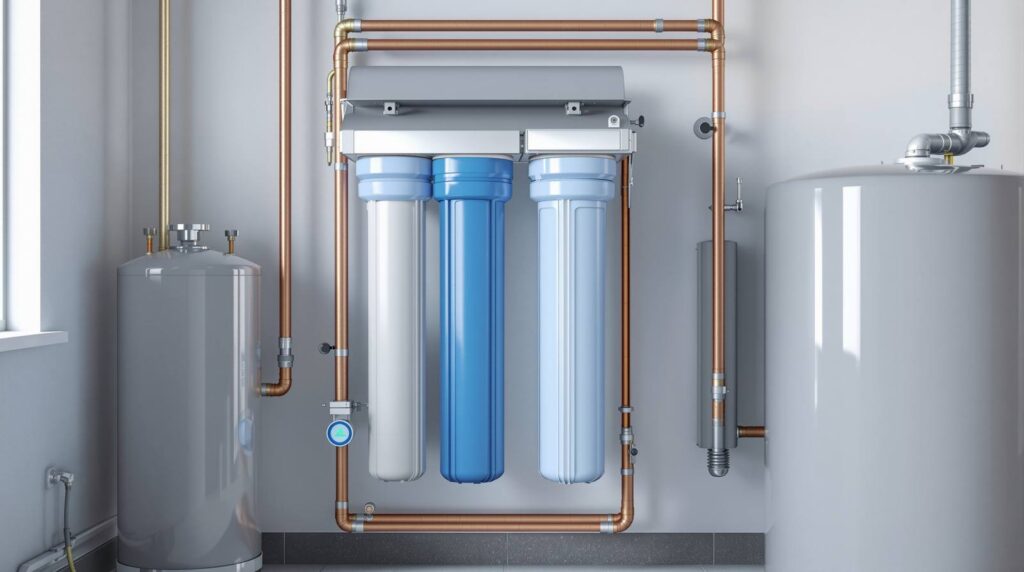
That’s where point-of-entry water filtration solutions can offer practical advantages. These systems are generally installed near the main incoming water line, treating water before it travels through connected household plumbing.
Also read: A Fresh Approach to Drinking Water: Why Knoxville Homeowners Are Considering Reverse Osmosis
Depending on the equipment selected, treatment may help reduce suspended particles, chlorine, and certain other unwanted substances.
This approach can be particularly convenient for larger households where maintaining individual filters in multiple rooms would become unnecessarily time-consuming.
It also gives homeowners a centralized location for monitoring and maintaining filtration equipment.
Finding a Filtration System That Reflects Your Needs
Not every home experiences the same water quality concerns. One homeowner might complain about an unpleasant chlorine smell, while another struggles with visible particles collecting around faucets.
When exploring whole-home water filter systems, consider your water source, testing results, household consumption, and the specific problems you want to address.
Also read: Understanding Your Water: Practical Ways to Improve Quality at Home
Sediment filters are useful for capturing suspended materials such as sand, silt, and rust particles. Activated carbon can help reduce chlorine and certain substances associated with unwanted tastes and odors.
Specialized treatment media may be appropriate for additional concerns identified through testing.
Rather than purchasing equipment based on impressive marketing descriptions, ask what each component actually does. Understanding its purpose makes the decision considerably easier.
The Difference Between Filtration and Water Softening
People sometimes assume that installing a household filter will eliminate those chalky white marks around shower doors and kitchen faucets. Unfortunately, ordinary sediment and carbon filtration doesn’t address dissolved hardness minerals.
Calcium and magnesium remain dissolved in water and require a different treatment approach.
Conventional ion-exchange water softeners reduce these minerals, helping limit the formation of new scale deposits.
For households experiencing both suspended sediment and excessive hardness, combining filtration with softening may offer a more comprehensive solution.
Neither technology replaces the other. They simply perform different jobs.
Understanding this distinction beforehand can prevent disappointing results and unnecessary spending. There’s little satisfaction in installing new equipment only to discover that your biggest household frustration hasn’t changed.
Keeping Water Flow Comfortable During Busy Days
Picture a Saturday morning at home. The washing machine is running, someone is taking a shower, and breakfast dishes are piling up in the sink.
During these busy periods, your filtration system needs to accommodate several activities simultaneously.
Equipment that’s too restrictive for your household’s demand may contribute to reduced water flow. Neglected filters can create similar problems as suspended particles accumulate.
Before installation, discuss recommended flow rates, incoming pressure, and the number of fixtures that might operate together.
A suitable filtration arrangement should support everyday water usage without creating frustrating interruptions.
After all, improving water quality shouldn’t mean waiting until someone finishes showering before you can comfortably wash the dishes.
Considering the Benefits for Your Household Equipment
A surprising amount of household maintenance happens in places you rarely see. Appliance inlet screens, plumbing valves, and faucet aerators can gradually collect suspended particles.
Appropriate sediment filtration helps reduce the amount of particulate material reaching these components.
When hardness is also addressed through suitable equipment, homeowners may experience fewer new mineral deposits inside water-heating appliances.
Although treatment won’t automatically repair existing equipment damage, it can support a practical preventive maintenance routine.
If you’ve recently purchased a new dishwasher or washing machine, it’s especially worthwhile to consider the water entering that appliance.
Taking care of your incoming water supply can complement the effort you already put into maintaining your home.
Planning for Maintenance Before Installation
Even the most convenient filtration equipment requires occasional attention. Cartridges need replacing, treatment media have limited capacities, and certain systems require periodic backwashing.
When consulting a provider such as Elders Water, ask about replacement costs, servicing schedules, installation accessibility, and documented contaminant reduction capabilities.
Leave enough space around the equipment for maintenance. An inconvenient installation location can turn a straightforward filter replacement into an unnecessarily difficult task.
Keeping maintenance records is another helpful habit.
Remember that clear appearance and pleasant taste don’t automatically establish drinking water safety. Appropriate testing and verified treatment performance remain essential when addressing health-related contaminants.
Building a More Comfortable Home Around Better Water
For families in Aledo, Texas, improving household water quality can be a sensible investment in everyday comfort.
Start by understanding your water supply, choose treatment that addresses identified concerns, and establish a maintenance routine that fits your lifestyle.
The rewards may appear in familiar moments — a shower with less noticeable chlorine odor, fewer suspended particles reaching fixtures, or a simpler approach to household filtration maintenance.
There’s no need to make water treatment more complicated than it has to be.
Sometimes, the most valuable household improvements aren’t the ones that attract attention. They’re the ones that quietly make ordinary life more enjoyable, every time you turn on a faucet.